
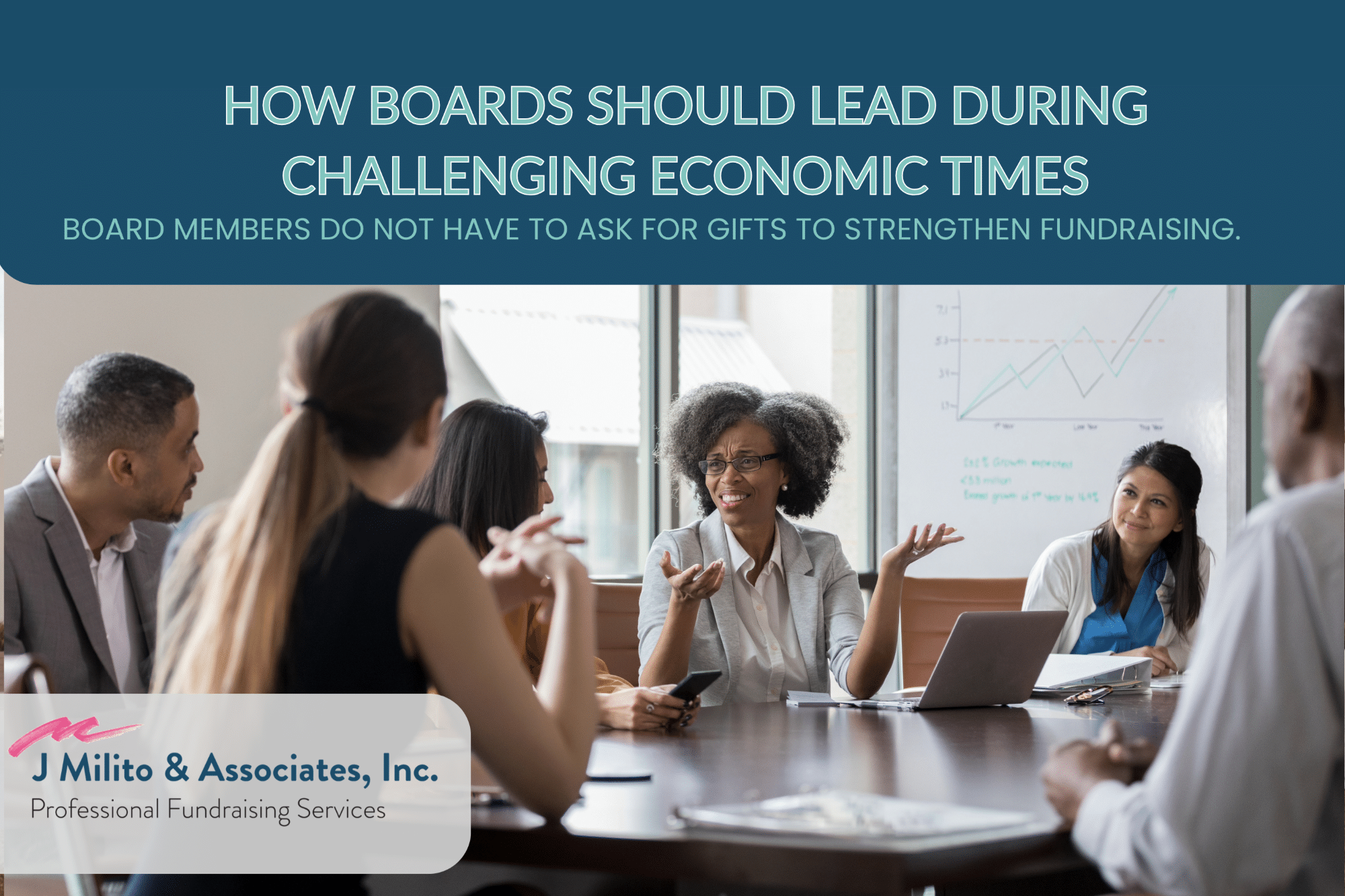
During challenging economic times, nonprofit boards often focus on budgets, expenses, reserves, and financial projections. Those responsibilities are essential.
But boards also have another important role.
They help build donor confidence.
Fundraising is not only the responsibility of the development department. It is a leadership function. When board members actively support donor relationships, they help strengthen the organization’s credibility, stability, and long-term fundraising success.
This does not mean every board member must ask for money.
It does mean every board member can help build relationships.
Board members can thank donors
One of the simplest and most effective ways board members can support fundraising is by thanking donors.
A call from a board member can be especially meaningful because it communicates leadership appreciation. The message is simple:
“I serve on the board, and I wanted to personally thank you for supporting this mission.”
That kind of call can leave a lasting impression.
Board members can open doors
Board members often know people who may care about the organization’s mission. They may be connected to business leaders, church members, alumni, community volunteers, or civic groups.
Opening a door does not mean pressuring someone for a gift. It may simply mean making an introduction, inviting someone to an event, or sharing why the organization matters.
Relationship-building often begins with warm introductions.
Board members can share impact
Every board member should be able to clearly explain what the organization does, why it matters, and how donors make a difference.
During uncertain times, donors want confidence. Board members who speak clearly and passionately about mission help reinforce that confidence.
Board members can help identify risk
Boards should regularly review donor retention, campaign performance, and stewardship practices.
Good questions include:
- Are we retaining donors?
- Which donors have not given this year?
- Are major donors being contacted personally?
- Are we thanking supporters consistently?
- Is our donor database accurate?
Board engagement improves when fundraising is discussed as relationship-building rather than
simply revenue generation.
Board members can model generosity
Board giving matters. It demonstrates commitment. It also gives board members credibility when encouraging others to support the organization.
The amount may vary by individual capacity, but participation matters.
Leadership creates confidence
In uncertain economic conditions, donors look for organizations that appear focused, transparent, and well led.
Board members help create that impression through their actions, communication, and personal engagement.
The strongest boards do not simply approve fundraising plans.
They help advance them.
At JMA, we encourage nonprofits to involve board members in stewardship, thank-you calls, donor outreach, and relationship-building. These activities are accessible, meaningful, and often
more comfortable than direct solicitation.
Boards do not need to become professional fundraisers.
But they should become mission ambassadors.
JMA can help your organization design board-friendly donor stewardship and outreach strategies.